Follow the 50/50 rule
Healthy play typically involves a 50/50 ratio of chasing and being chased. Of course, this is approximate! However, if you notice one dog is constantly being chased, it might be time to intervene. Pause the play and gently restrain the dog that was the primary “chaser.” If the “chased” dog approaches the restrained dog and tries to elicit play, then you can go ahead and let them play again because that means the dog being chased is ok to continue. Keep taking breaks to ensure that’s still the case as the play continues.
Observe body language
As dogs play, their body language should be loose. When play escalates to conflict, you may see stiff body postures and even if the tail is wagging, it’s not a full side to side sweeping motion like when they are happy. Play with a dog friend should look very similar to play at home with you. If you notice obvious differences, it may be time to intervene to ensure your dog is having an enjoyable experience.
The Freeze
During healthy play, dogs will often freeze for a few seconds, then go back to running or wrestling. You may see them pause in a play bow position, or stand still for a moment. These are natural pauses dogs use to let the playmate know that this is all a game and not an actual fight. It’s a check in they do with each other to make sure everyone is on the same page that this is just a fun and playful interaction. If these freezes aren’t occurring, you can always help them take a break to ensure they still want to go back to playing.
When in doubt, take a time out
Some dogs play very intensely and it can be difficult to know if they are serious in their growls or just playing. Whenever you have a doubt in your mind, offer the dogs a break. Do both dogs want to go back to playing after a brief break? If one or both dogs aren’t eager to play again then the play should end. Some dogs start out playing, but get overly wound up and it can escalate to aggression. Frequent breaks are important especially for dogs who tend to be more intense.
Play sessions shouldn’t last too long as the longer play continues, the higher the likelihood of a negative experience. Even if your dog has tons of energy, the other dog may tire more quickly and get aggressive when they want the play to end. For most puppies, have them take a break every five minutes or so, if they don’t do so on their own. Generally for adults, play dates between dogs shouldn’t last longer than an hour.
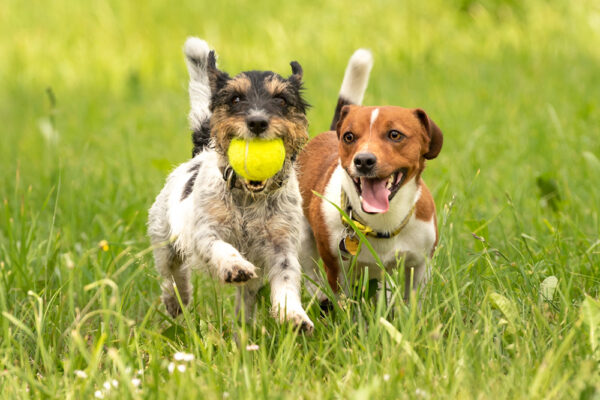
Socialization comes in many forms
As a dog behavior professional, I see many client dogs who are friendly off leash but who are whining, lunging, and barking on the leash because they want to interact with every dog they see. While it’s important for dogs to have opportunities to interact with other dogs if they find that enjoyable, it’s equally important for them to learn to happily coexist around other dogs without interacting with each and every one. Providing opportunities to watch other dogs from a distance is important and should be a part of every puppy’s socialization experience. You can give your puppy treats for calmly observing other dogs or passing by them. Sitting outside a park and giving your puppy a favorite chew or food stuffed Kong toy to occupy them while they observe other dogs passing can go a long way in creating a well rounded dog. A walk with a friend or neighbor’s dog can also be a great enrichment opportunity for social dogs who enjoy this activity.
Every dog is different and has different needs. The best thing we can do for our dogs is tune in to what they enjoy the most and provide safe and positive experiences.

Join Our Expert Dog Trainer Sessions Today
Ready to witness remarkable transformations in your dog’s behavior? Join us on this journey of positive reinforcement and effective training. Let’s create a lasting bond with your furry companion – sign up for a session now and experience the joy of a well-trained, happy dog!