Help! My Dog Is Acting Weird! When Behavior Change Signals a Health Problem
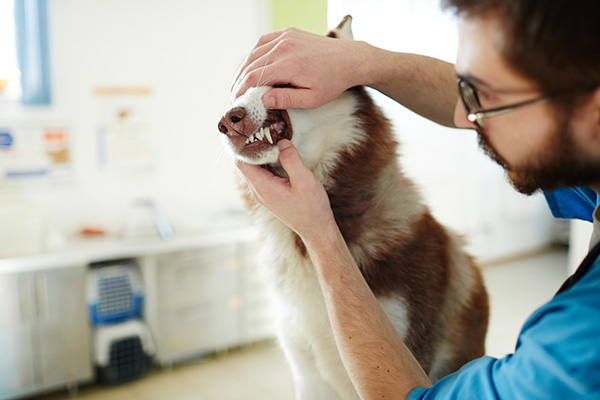 We all know how having a nagging toothache or a lingering migraine can make simple annoyances seem unbearable. Our canine friends can also experience this! In fact, it is so much harder for them because they cannot voice what is troubling them. We are left with the task of noticing tiny changes in body language and behavior that will ultimately help us discover what is going on. This is why having a veterinary team you trust is so important not only for our dogs’ physical health, but ultimately behavior and overall wellbeing as well.
As a canine behavior professional, I have seen many odd cases throughout the years. I have noted sudden behavior changes in my own dogs as well that were directly related to changes in their health. I used to think that if a health issue was the root cause of a behavior change, it would appear in a way that easily pointed to the problem. For example, if a dog had a bladder infection they might start having accidents in the house even if they were previously fully potty trained. A dog with an ear infection might respond aggressively if someone reached to touch their ears or head. This seemed like a reasonable assumption and I have seen these things occur. The more I worked on behavior cases, however, the more I realized many signs are more subtle.
The curious case of the mutt that got the munchies
My family dog, Lily, gave me the first glimpse into just how important it is to never dismiss behavior changes. While Lily loved food, she never got into the trash even as a puppy. Suddenly she started knocking over the trash bin and trying to eat what was inside. She even responded aggressively a few times when my parents tried to remove her. At first glance, one would think that she probably just discovered some really yummy food in the trash one day and couldn’t help but try to get it. Here’s the twist: without any intervention, the behavior would stop as quickly as it started. After about 2-3 times of this occurring, I noticed a pattern. Within days of the trash dumping behavior starting, we would see symptoms of a bladder infection. Like clockwork, once the bladder issue was resolved, the trash diving behavior would stop. It became so consistent that the day she started dumpster diving we knew we had to make an appointment at her veterinary hospital because she probably had a bladder infection. This behavior change was completely unrelated to a bladder issue and yet it became a consistent sign that she had one. My best guess is that she loved food so much that she saw eating as something that was comforting and made her feel good. Whenever she didn’t feel well, she thought finding and consuming food might help her feel better.
The tire tearing terrier
Additionally, I worked with a client who had a shepherd/pit bull terrier mix who came to Home Schooled Hound to learn some manners, particularly not jumping on guests. We started working together when the dog was about 6 months old. At about a year of age she suddenly started destroying their car by chewing the tires and fender. She had never had issues with destructive behaviors even as a puppy! Since this behavior was a sudden change I encouraged the family to get a veterinary exam before addressing the behavior. The clients contacted me and told me that she ended up having an ear infection and within days of treatment the destructive behavior completely stopped without any other intervention. Pain can be stressful and chewing offers relief to stress so I can only guess that perhaps this was the reason this dog engaged in the destructive behavior.
Pause the punishment
 These examples are just one reason punishment-based training methods can be so harmful to dogs. When we view canine behavior with a frame of mind that dogs are trying to be “dominant” and we need to be firm with them, we see dogs through a very different lens. Any behavior they engage in that doesn’t suit us becomes a “How dare you!” moment that requires immediate correction or (so the internet says!) they will learn that they can get away with anything. It’s a “doomsday” mentality that dogs are waiting for just the right moment to take our power away and become the “pack leader” which ultimately means they will run amok in our homes.
Dogs are sentient beings who can feel pain, discomfort, nausea, agitation, and more.. When they don’t feel well they can’t just pop an Advil or schedule an appointment with their veterinarian. It’s up to us as their caretakers to look at behavior changes and ask what might be going on. Their behavior, like ours, has a function! If the behavior change is sudden, then it’s always wise to check with a veterinary professional to ensure that we rule out any health issues first and identify the root of the problem. Every day, dogs are walking around with untreated allergies, unknown stomach problems, and undiagnosed arthritis, injuries, and pain. Yet we’re scratching our heads trying to figure out why our dogs are reactive on walks, sensitive to touch, or behaving abnormally. Of course not every behavior problem has an underlying health issue, but behavior is complex and requires a holistic approach. Dogs are always speaking to us through their behaviors. It’s up to us to listen.

Join Our Expert Dog Trainer Sessions Today
Ready to witness remarkable transformations in your dog’s behavior? Join us on this journey of positive reinforcement and effective training. Let’s create a lasting bond with your furry companion – sign up for a session now and experience the joy of a well-trained, happy dog!