Nothing is more adorable than a sleeping puppy. Perhaps it’s because in these glorious hours of sleep, we can fully admire them because they aren’t getting into mischief!
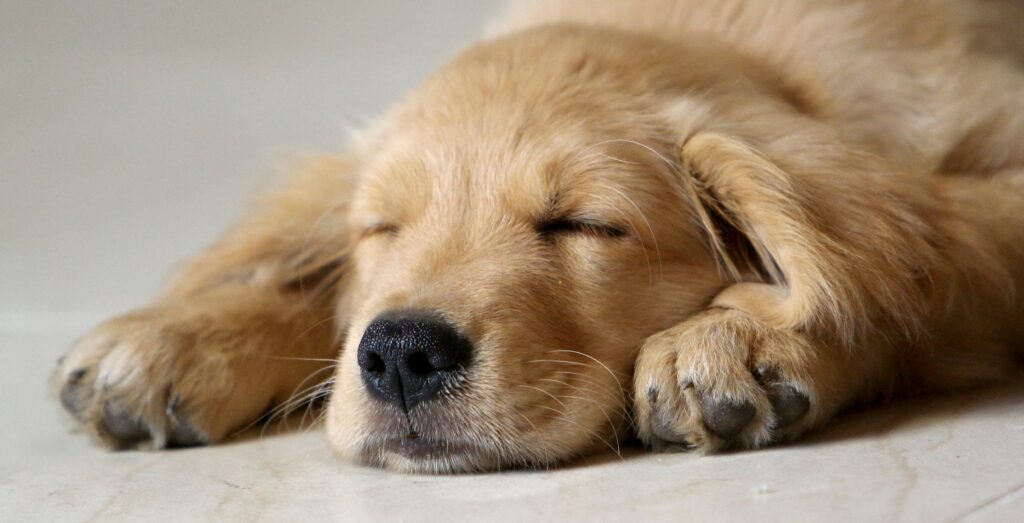
As wonderful as it is for us to witness a puppy sleeping soundly, it’s even more important to a puppy’s proper growth and development to get enough sleep.
Read on to learn:
-
Why sleep is so important
-
What are the signs of too little sleep
-
How much sleep a puppy needs, by age
Sleep has many purposes
These teeny tiny little bundles of joy are growing and developing quickly, and in just a few short months they will resemble an adult dog. In order for this physiological development to take place, puppies need an incredible amount of sleep to develop properly. Their newly built and ever-growing immune systems also need enough sleep to function properly and work optimally.
Puppy brains are constantly in overdrive taking in so much new information every minute of the day! It is through the process of sleep that all this new information is filed away and stored for future use. Everything they encounter in each experience is processed and turned into usable information that their brains will pull from for the rest of their life. Even every socialization experience and training session must be processed through sleep.
Lack of sleep: A recipe for disaster!
We know that sleep is important both for proper growth and development and for processing experiences and learning, but how does a lack of sleep affect behavior? Puppies who don’t get enough sleep can become hyperactive, bite excessively, become destructive, and can become more vocal and easily frustrated. It’s easy to assume that if a puppy is tired they will simply go to sleep, however, just like children, puppies need structure and an appropriate environment to thrive. If there is too much activity going on around them–running children or other animals, prodding hands wanting to play with and pet the puppy, and an overall busy household– the puppy in the home might not be getting enough sleep.
Puppies are irresistible, and especially when they first come home they are so new to everyone in the family that it can be hard not to want to pet and play with them constantly. However, many of the challenging behaviors puppies exhibit are often rooted in a lack of sleep.
How much sleep should a puppy get?
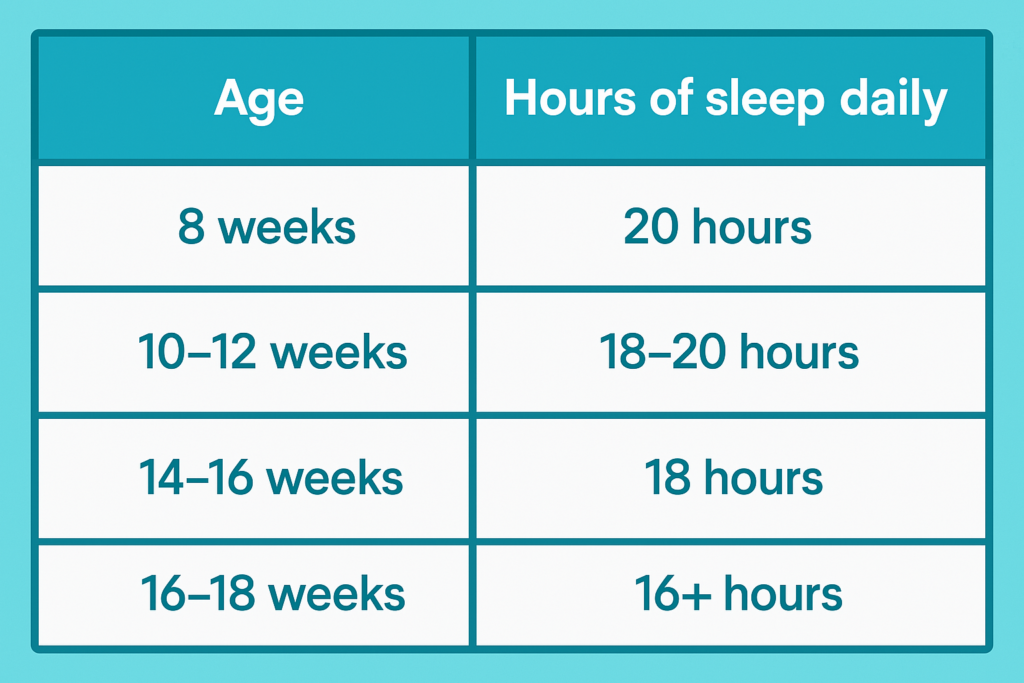
While adult dogs need at least 12-14 hours of sleep per day, puppies need far more. Depending on a puppy’s age, the younger they are the more sleep their body and brain requires.
How much sleep puppies need by age:
Strategies to help puppies get enough sleep
Since some puppies have a harder time than others getting enough sleep, there are ways to ensure that your puppy catches all their “Zs.”
Stick to a schedule
Create structure in your puppy’s day so that they have scheduled nap times. If it’s challenging to predict what your schedule will look like each day and you need a little more flexibility, you can create a pattern of behavior by having nap times be after certain activities. For example, after a play session and potty break it’s time for a nap. You can also use environmental cues to remind your puppy it’s time to sleep. For example, when you sit down at a specific desk and open your laptop, it’s time for puppy to take a nap.
Create a sleep area
A specific bed, crate, or exercise pen can become a safe napping area. You can tuck the bed/crate/pen under a desk or kitchen table, so they can still be near where you are, but away from high traffic areas. If there are young children in the home, they can create little signs for their furry friend to place around the outside of the area to serve as a reminder to themselves that it’s a puppy “sleep zone” and they are not to disturb.
Drown out disruptive noise
If your household is particularly noisy, a white noise machine or box fan can be an excellent way to help drown out disruptive sounds. Even calming music such as “Through a Dog’s Ear” can be a helpful aid to sleep.
Provide calm activities to promote sleep
Since we can’t simply hypnotize puppies into a sleep state, we have to rely on other strategies to facilitate sleep. Calm activities such as providing a chew, food puzzle toy, lick mat, food scatter, or brief training session reinforcing calmness can help puppies become more relaxed and ready for a nice nap. Sometimes puppies are too wound up to get some shuteye, and need a non-stimulating activity to help them wind down for sleep.
Puppies are growing babies and need proper sleep to grow, thrive, and turn into the beautiful dogs they were meant to become.
Photo by sErgio mOreira on Unsplash

Join Our Expert Dog Trainer Sessions Today
Ready to witness remarkable transformations in your dog’s behavior? Join us on this journey of positive reinforcement and effective training. Let’s create a lasting bond with your furry companion – sign up for a session now and experience the joy of a well-trained, happy dog!